UNESCO site
Joya de Cerén
A preserved Maya farming village often called the Pompeii of the Americas, best for understanding daily life.
Open guide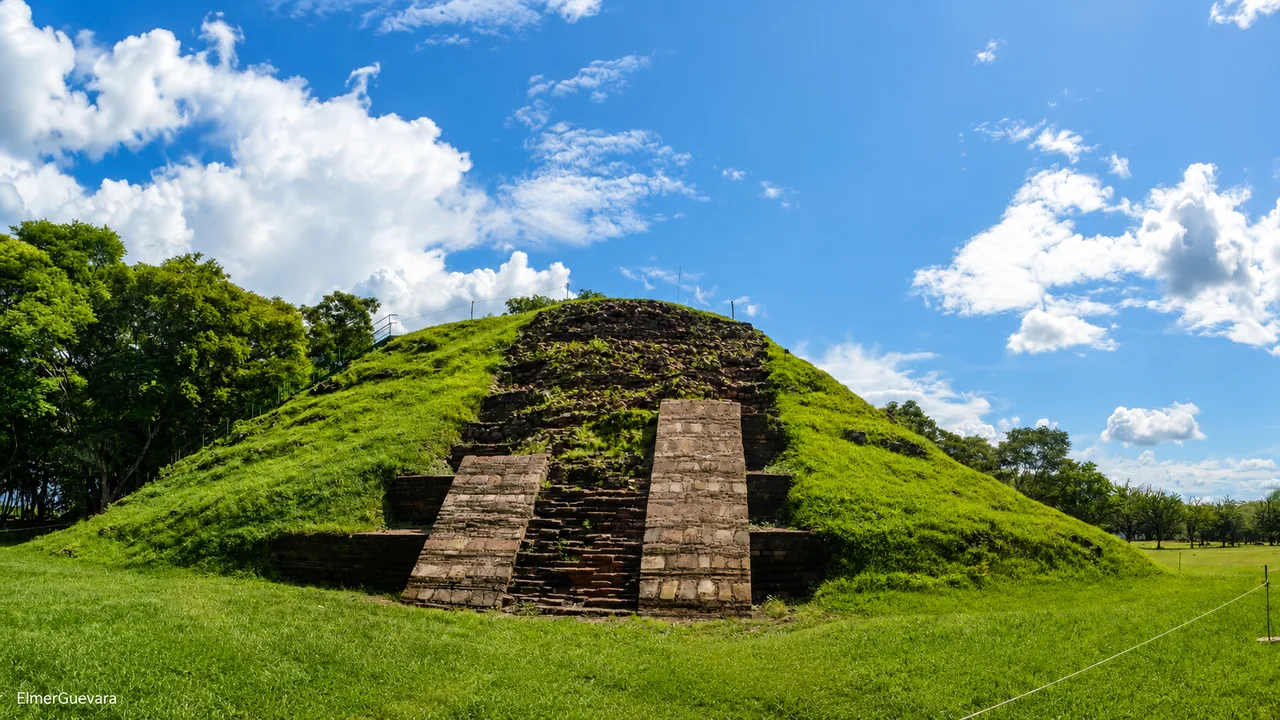
History & Archaeology
Add Maya sites, colonial streets, museums, and cultural context to a trip built around beaches, volcanoes, and food.
Photo: ElmerGuevara
Choose your route
Most archaeological parks need a few hours. Joya de Cerén and San Andrés pair well from San Salvador, while Tazumal and Casa Blanca sit close together near Santa Ana.
UNESCO site
A preserved Maya farming village often called the Pompeii of the Americas, best for understanding daily life.
Open guideCeremonial center
San Andrés Archaeological Park sits around Ciudad Arce and San Juan Opico in La Libertad Centro. It is one of El Salvador’s largest pre-Hispanic centers and was probably a regional capital between 600 and 900 AD, with a monumental core surrounded by a broad residential area.
Open guideIconic ruins
El Tazumal, in Chalchuapa, Santa Ana Oeste, preserves the structures of a Maya settlement occupied from about 100 to 1200 AD and abandoned around 1200 AD.
Open guideLarge ancient city
Cihuatán Archaeological Park is near Aguilares in San Salvador Norte. It preserves one of El Salvador’s notable pre-Hispanic cities: an impressive ceremonial center spanning about 42 hectares, with pyramids, platforms, walls, a palace, and other structures.
Open guideChalchuapa history
Casa Blanca, in Chalchuapa, Santa Ana Oeste, has ceremonial mounds, a museum, and an indigo workshop. Confirm workshop activity before visiting.
Open guideCore archaeology parks
These parks preserve regional capitals, Maya settlements, ceremonial centers, and palace remains. Casa Blanca also introduces traditional indigo dyeing.
Ciudad Arce and San Juan Opico, La Libertad Centro. A major pre-Hispanic center, probably a regional capital between 600 and 900 AD.
Chalchuapa, Santa Ana Oeste. Ancient Maya structures, ball court context, temples, and a long occupation from about 100 to 1200 AD.
Aguilares, San Salvador Norte. A large pre-Hispanic city with pyramids, platforms, walls, palace remains, and a 42-hectare ceremonial center.
Chalchuapa, Santa Ana Oeste. A Maya ceremonial center with varied mounds, natural atmosphere, and traditional indigo dyeing heritage.
Archaeology in the landscape
Joya de Cerén preserves household life; Tazumal brings a more monumental scale. Seeing both makes the contrast immediate.
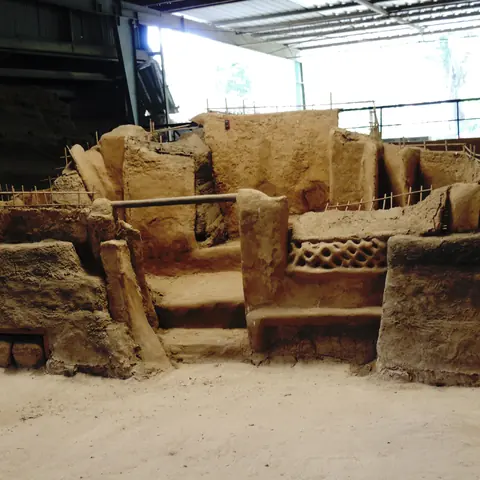
Joya de Cerén brings daily village life unusually close.
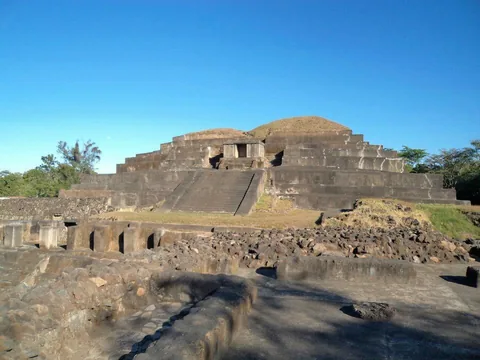
Tazumal offers the strongest monumental contrast.
Good to know
Help with choosing archaeological sites and understanding what makes each one different.
The parks show different aspects of pre-Hispanic life: Maya homes at Joya de Cerén, a political center at San Andrés, and monumental architecture at Tazumal and Cihuatán.
Joya de Cerén and San Andrés share the Zapotitán Valley, while Tazumal and Casa Blanca are close together in Chalchuapa.
Check each park’s opening days, current access, guide availability, heat, and travel time before combining sites.